Introduction :>
The rise of decentralized finance (DeFi) has transformed the way people interact with financial services. Among the many protocols driving this innovation, Aave stands out as one of the most influential and widely used platforms in the DeFi ecosystem. By enabling users to lend, borrow, and earn interest on digital assets without relying on traditional financial intermediaries, Aave has helped redefine modern finance.
This article explores what Aave is, how it works, its key features, benefits, risks, and its role in shaping the future of decentralized finance.
What Is Aave?
Aave is a decentralized lending and borrowing protocol built primarily on the Ethereum blockchain. Launched in 2020, the platform allows users to deposit cryptocurrencies into liquidity pools and earn interest, while borrowers can access loans by providing collateral.
The name "Aave" comes from the Finnish word for "ghost," symbolizing the protocol's commitment to creating transparent and open financial infrastructure that operates without centralized control.
Unlike traditional banks, Aave uses smart contracts to automate lending and borrowing activities. These contracts execute predefined rules without the need for intermediaries, reducing costs and increasing accessibility.
How Aave Works
At its core, Aave operates through liquidity pools.
Lending :/
Users who wish to earn passive income can deposit supported cryptocurrencies into Aave's liquidity pools. These deposited assets become available for borrowers, and lenders earn interest generated from borrowing activity.
When users deposit assets, they receive corresponding interest-bearing tokens that represent their share of the pool and accumulate value over time.
Borrowing :/
Borrowers can access funds by depositing collateral that exceeds the value of the loan. This overcollateralization protects lenders against default risk.
For example, a user may deposit Ether (ETH) as collateral and borrow stablecoins such as USDC. This allows them to access liquidity without selling their underlying assets.
Interest Rates :/
Interest rates on Aave are determined algorithmically based on supply and demand. When borrowing demand increases, interest rates rise, incentivizing more users to provide liquidity.
# Users can often choose between:
Variable interest rates, which fluctuate according to market conditions.
Stable interest rates, designed to provide more predictable borrowing costs.
Key Features of Aave ://
Flash Loans :/
One of Aave's most innovative features is the flash loan.
Flash loans allow users to borrow assets without collateral, provided the borrowed funds are repaid within the same blockchain transaction. If repayment does not occur, the entire transaction is reversed automatically.
Flash loans have enabled new strategies in arbitrage, collateral swapping, refinancing, and liquidation management.
Multi-Asset Support :/
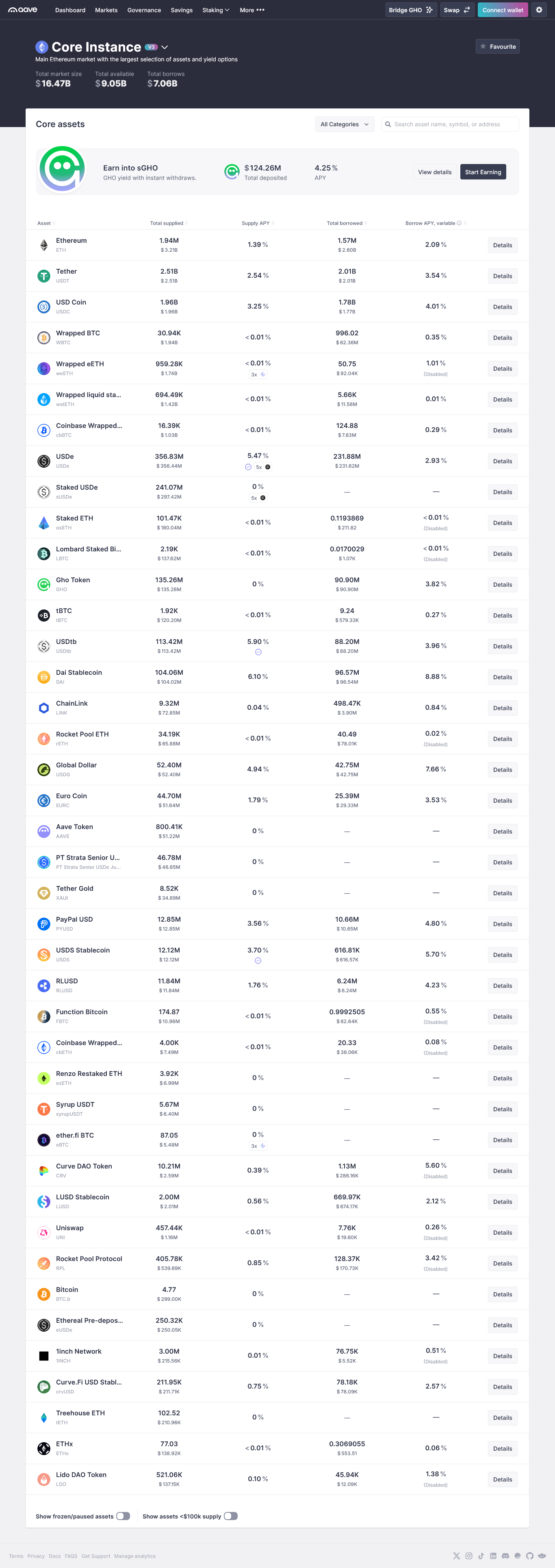
Aave supports a wide range of cryptocurrencies, including:
:> Ethereum (ETH) :> USD Coin (USDC) :>Dai (DAI) :>Wrapped Bitcoin (WBTC)
:> Chainlink (LINK) :> Numerous other digital assets
This broad asset support increases flexibility for both lenders and borrowers.
Governance :/
Aave is governed by its community through the AAVE governance token.
Token holders can vote on proposals related to protocol upgrades, risk parameters, asset listings, and treasury management. This decentralized governance model allows users to participate directly in shaping the platform's future.
Cross-Chain Expansion :/
To improve accessibility and reduce transaction costs, Aave has expanded beyond Ethereum to multiple blockchain networks. This multi-chain strategy helps users benefit from faster transactions and lower fees while maintaining access to Aave's services.
Advantages of Using Aave //
Accessibility ://
Anyone with a compatible crypto wallet and internet connection can access Aave's services without undergoing traditional banking procedures.
Transparency ://
All transactions and smart contracts are publicly verifiable on the blockchain, providing a level of transparency rarely seen in conventional finance.
Passive Income Opportunities ://
Lenders can generate returns on idle digital assets through interest payments from borrowers.
Innovation ://
Features such as flash loans demonstrate how decentralized finance can create entirely new financial products that are impossible or impractical in traditional systems.
Risks and Challenges //
Despite its advantages, Aave is not without risks.
Smart Contract Risk //
As with all DeFi protocols, vulnerabilities in smart contract code could potentially lead to financial losses.
Market Volatility //
Sharp price fluctuations in collateral assets may trigger liquidations, causing borrowers to lose part of their collateral.
Regulatory Uncertainty //
The regulatory landscape for decentralized finance remains uncertain in many jurisdictions, which could impact future growth and adoption.
Liquidity Risks //
Although Aave maintains substantial liquidity, extreme market conditions can affect borrowing and lending efficiency.
Aave's Impact on Decentralized Finance :>
Aave has played a major role in advancing DeFi adoption by demonstrating that lending and borrowing can function effectively without centralized institutions. Its innovations have inspired numerous competing protocols and contributed to the rapid growth of decentralized financial markets.
The protocol's focus on security, governance, and continuous innovation has helped establish it as one of the most trusted platforms in the blockchain ecosystem.
Conclusion ://
Aave represents a significant milestone in the evolution of decentralized finance. By leveraging blockchain technology and smart contracts, it offers an alternative financial system that is open, transparent, and accessible to anyone worldwide.
Through features such as decentralized lending, flash loans, community governance, and multi-chain support, Aave continues to push the boundaries of what is possible in digital finance. While risks remain, its influence on the broader DeFi landscape is undeniable, making it one of the most important protocols in the cryptocurrency industry today.

HTML Website Generator